University of Toronto AEMS Academy

AEMS Academy Summer Course

Lenses to Lasers Photonics

Photonics: Lenses to Lasers introduces students to the science and technology of generating, controlling, and detecting light. Students explore how light enables observation, measurement, communication, sensing, medical imaging, manufacturing, computing, and scientific discovery.

πŸ“…
Dates August 10–14
πŸ•˜
Schedule 9:00 a.m. to 4:00 p.m. EDT
πŸ“
Location Galbraith Building Room 303, 35 St George St., Toronto, ON M5S 1A4
πŸ’²
Tuition $700/wk – Domestic $1100/wk – International
πŸŽ“
Audience High-school and undergraduate students

Photonics is the science and engineering of light.

Light is one of the most fundamental ways we observe and understand the universe. Photonics uses light as a powerful tool for exploring phenomena beyond ordinary human vision, from distant galaxies and exoplanets to microscopic cells and molecules.

Light as a tool for discovery

Photonics has led to many of the technologies that underpin modern society. Optical fibres carry vast amounts of information around the globe, lasers enable precision manufacturing and medical procedures, and advanced imaging systems help scientists and engineers make new discoveries.

As photonic technologies continue to advance, they are expected to play an increasingly important role in communications, sensing, quantum technologies, and next-generation computing systems.

By studying photonics, students gain insight into a field that lies at the intersection of physics, engineering, materials science, and technology, with applications spanning healthcare, telecommunications, energy, and scientific research.

Photonics is multidisciplinary

Photonics is a highly multidisciplinary field at the forefront of modern science and engineering, drawing on:

  • Modern Optics
  • Electromagnetism
  • Materials Science
  • Quantum Mechanics
  • Condensed Matter Physics
  • Quantum Electrodynamics
  • Electrical Engineering
  • Computer Science & Engineering
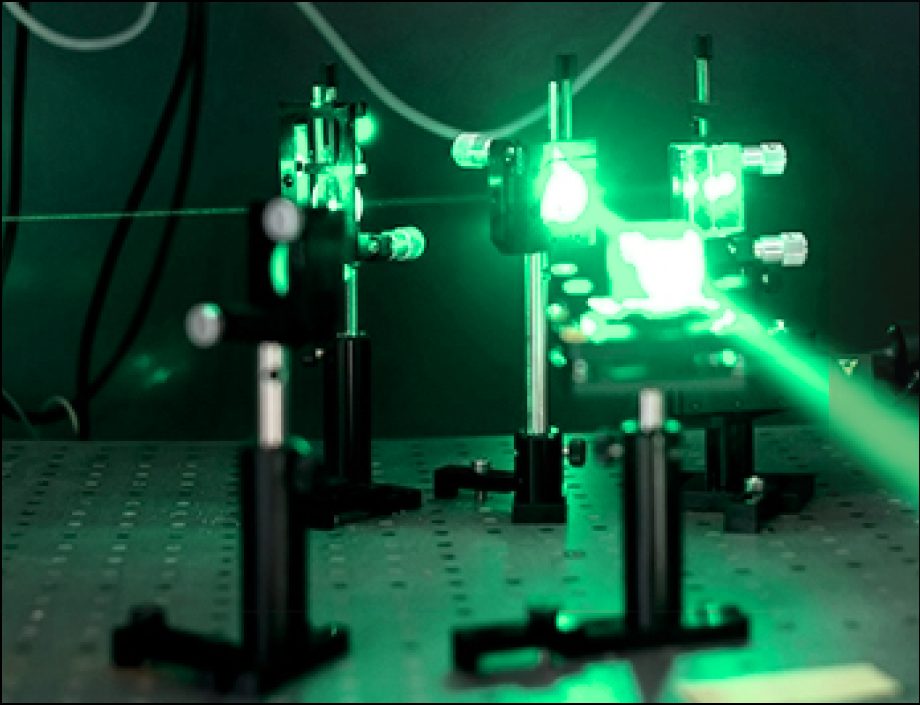
Photonics laboratory experiment with green laser light

From lenses to lasers

This course introduces students to the fundamental principles of optics and photonics through a combination of theory, demonstrations, and hands-on laboratory activities.

Beginning with the nature and properties of light, students explore lenses, focal length, and optical systems before investigating polarization. The course then examines interference and diffraction, revealing how the wave nature of light produces phenomena ranging from colourful natural patterns to holography and precision measurement techniques.

Students also study reflection, refraction, and total internal reflection, discovering how these principles enable fibre-optic communication. The program concludes with an introduction to lasers and their applications in medicine, manufacturing, communications, and scientific research.

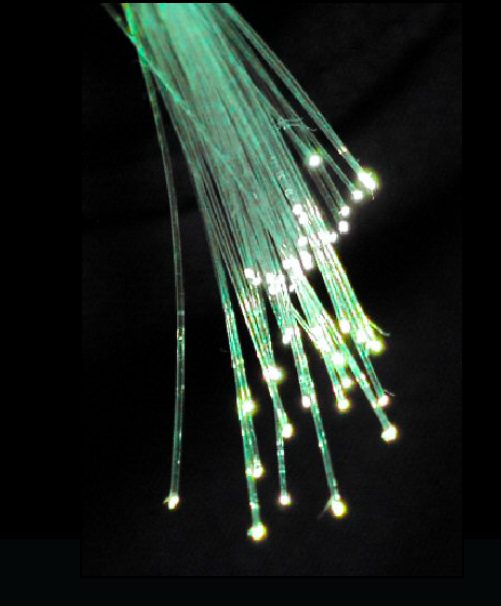
Optical fibres carrying light

Hands-on optical experimentation

Throughout the week, students will perform experiments, make optical measurements, and gain practical experience with equipment and techniques used in modern optics laboratories.

Students will connect scientific principles to real-world optical systems, including lenses, telescopes, microscopes, fibres, lasers, and measurement tools.

Learn photonics through mentorship, experimentation, and interdisciplinary STEM.

πŸ’¬

Mentorship Opportunities

Learn about photonics from expert faculty, graduate researchers, and senior undergraduate students at the forefront of science and engineering.

πŸŽ“

Multidisciplinary STEM Education

Photonics brings together physics, engineering, materials science, and computing to address real-world technological challenges. Students will develop transferable scientific, analytical, and problem-solving skills relevant across STEM disciplines and emerging fields.

βœ‹

Emphasis on Hands-On Learning

This course combines rigorous STEM education with demonstrations, hands-on experiments, and interactive activities, giving students the opportunity to learn by doing and experience science and engineering in action.

πŸ‘₯

Meet Like-Minded and Driven Individuals

Students will connect with curious and motivated peers who share their passion for science and technology. Together, they will explore exciting topics in physics and engineering.

NOTE: The AEMS Academy program, which falls under the university-wide AEMS Toronto Nuclear Cluster, operates independently of the DEEP and CREATE outreach programs.

Curriculum, demonstrations, location, and tuition.

Curriculum

  • Day 1: Light
  • Day 2: Polarization
  • Day 3: Interference
  • Day 4: Total Internal Reflection (TIR)
  • Day 5: Lasers

Demonstrations and Experiments

  • Building a solar cell: Harness the power of the sun with household items.
  • Measuring key optical phenomena: Measure focal length, refractive index, wavelength, and other optical properties.
  • Design telescopes and microscopes: Explore what it takes to build devices that allow us to see beyond the naked eye.

Location

Classroom: Galbraith Building Room 303, 35 St George St, Toronto, ON M5S 1A4

We will also be touring various labs around campus.

Click here for a map

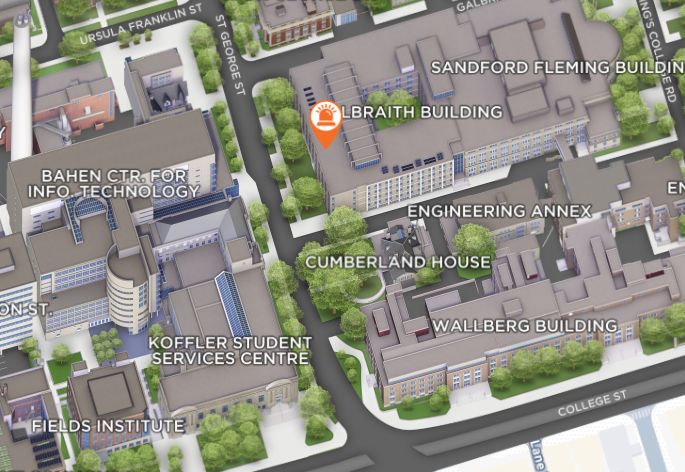
Map of the Galbraith Building location

Tuition

Tuition for the program is CAD $700 per week for domestic students and CAD $1,100 per week for international students.

Successful applicants will be asked to pay the full tuition fee within 48 hours of their acceptance offer in order to confirm their participation. Offers may be forfeited if payment is not received by the deadline.

We understand that exceptional circumstances can arise. If you anticipate any difficulties meeting the payment deadline, please contact us and we will do our best to assist you.

Eligibility, application process, and student support.

Eligibility

High-school students in Grades 11 or 12 and undergraduate students are eligible to apply.

Ambitious high-school students in Grade 10 can apply but must answer additional questions.

There is no minimum grade requirement and no mandatory prerequisites. However, having a strong background and interest in physics, chemistry, and mathematics is highly relevant.

Applying

There is no fee to apply to the program. As part of the application process, applicants will complete a short application form with several brief questions about their interest in the program and why they would be a strong participant.

Applicants will also be asked to provide information such as age, educational background, dietary restrictions or allergies, and any accessibility requirements. Students are required to bring their own lunch and refreshments, though water and healthy snacks will be available.

All applicants are required to sign a participation waiver.

Applications submitted after the deadline will still be considered, subject to space availability, but will not receive priority during the selection process.

We intend to notify all applicants of their application status no later than one week after the application deadline.

Cancellation and Refunds

No refunds for cancellations.

In the unlikely event the program does not run, all participants will receive a full refund.