Faculty of Applied Science & Engineering, University of Toronto
AP²D Labs Advanced Photonic & Photovoltaic Devices
AP²D Labs

Research

Light–matter interactions

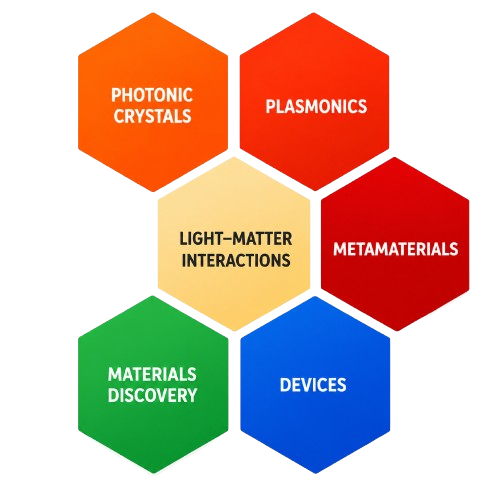
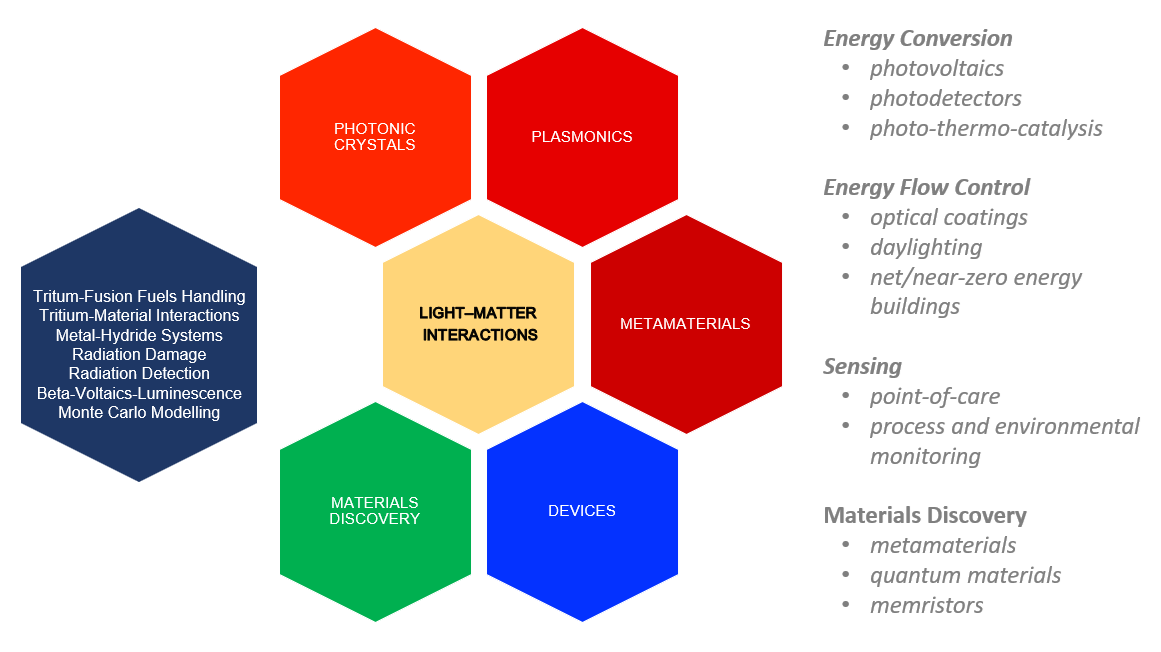
Work in the lab moves across photonics, sensing, energy materials, and functional devices — often overlapping in the same project.

Diagram of AP2D research themes organized around light-matter interactions

What we work on

Selected research areas

A few of the areas where the group is active today, with recent examples from the literature.

Photonics & Optical Materials

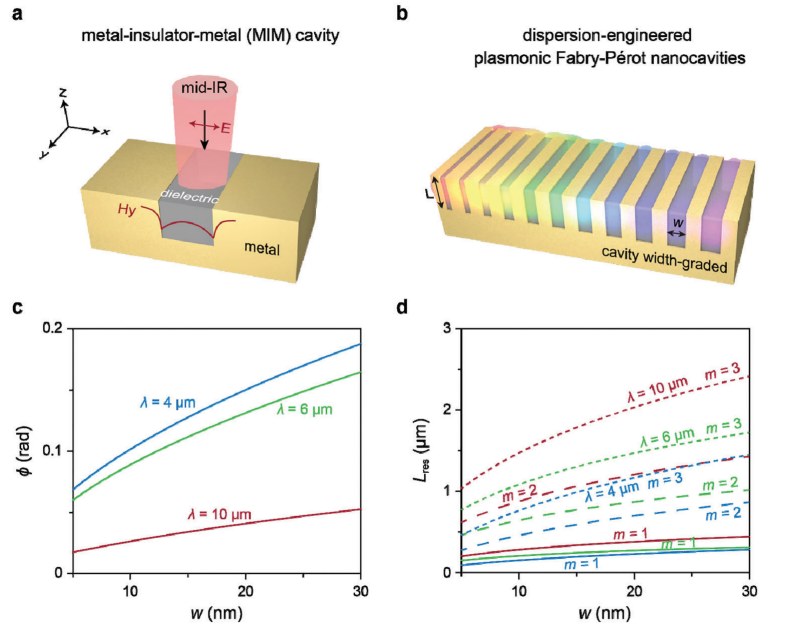
Nanostructured films, metamaterials, and photonic architectures that generate, guide, trap, and convert light, from graded gratings and plasmonic resonators to dispersion-engineered coatings.

In 2024, Dixon et al. demonstrated dispersion-engineered plasmonic metasurfaces that support broadband SEIRA across the mid-infrared.
  • Photonic structures
  • Plasmonics
  • Metamaterials
  • Optical coatings
  • Photodetectors
Figure from Dixon et al. 2024 on dispersion-engineered plasmonic metasurfaces

Sensing & Diagnostics

Nanophotonic and spectroscopic platforms for biomedical, agricultural, and environmental sensing, pairing optical enhancement with spectral analysis for high sensitivity in compact formats.

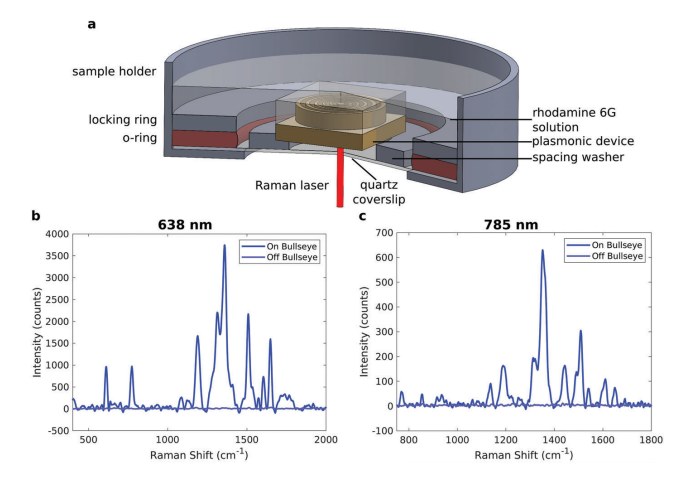
In 2023, Dixon et al. showed plasmonic bullseye nanocavities that localize light for multi-wavelength SERS, with strong on-resonance enhancement relative to off-structure controls.

  • SERS & Raman biosensing
  • Nanophotonic sensing
  • Point-of-care diagnostics
  • AI-assisted spectral analysis
  • Biomedical & agricultural sensing
Figure from Dixon et al. 2023 on plasmonic bullseye nanocavities for SERS

Energy Materials & Conversion

Thin-film photovoltaics, solar fuels, photocatalysis, and hydrogen-related materials — including photonic crystal cells, photoreactors, and coatings that improve light harvesting and catalytic efficiency.

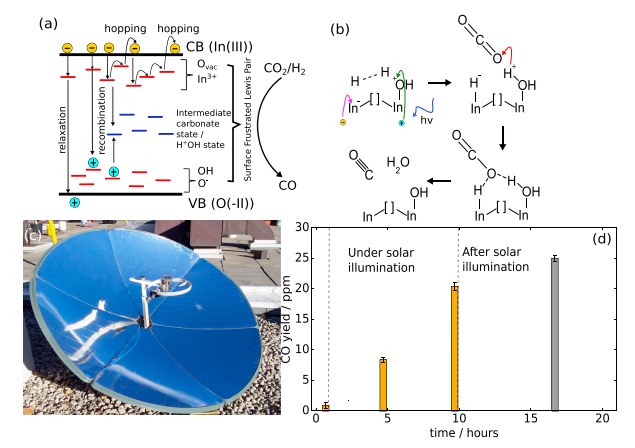
In 2021, Loh et al. reported persistent CO2 photocatalysis for solar fuels that continues in the dark after illumination, linking surface chemistry to sustained conversion.

  • Photovoltaics
  • Solar fuels
  • Hydrogen technologies
  • Photocatalysis
  • Energy-related functional materials
Figure from Loh et al. 2021 on persistent CO2 photocatalysis for solar fuels

Electronic & Functional Devices

Semiconductor thin films, memristors, and responsive materials, combining deposition, defect engineering, and device physics for switching, detection, and integrated systems.

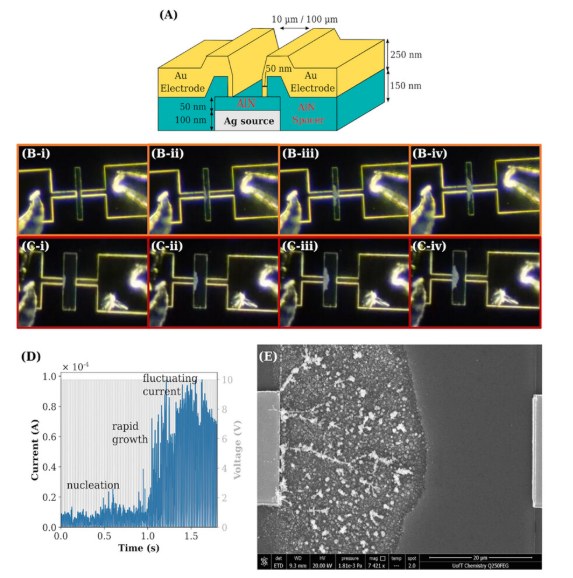
In 2025, Loh et al. showed how residual stresses and micro-voids drive metal diffusion in filament-based memristors, clarifying pathways for controlled filament growth.

  • Memristors
  • Semiconductor devices
  • Thin films
  • Responsive materials
  • Intelligent devices & systems
Figure from Loh et al. 2025 on filament-based memristors

Interested in collaborating?

We welcome conversations with academic and industry partners about joint projects, facility access, and student co-supervision.