University of Toronto AEMS Academy
Taming a Star — A Fusion Course for High Schoolers

AEMS Academy Summer Course

Taming a Star Fusion Energy

Fusion Energy: Taming a Star is an immersive one-week summer program for motivated high school students who are curious about physics, engineering, and the future of clean energy. Over five engaging days, students explore the science behind nuclear fusion and discover how scientists and engineers are working to recreate it safely here on Earth.

📅
Dates C1: July 20–24 C2: July 27–31
🕘
Schedule 9:00 a.m. to 4:00 p.m. EDT
📍
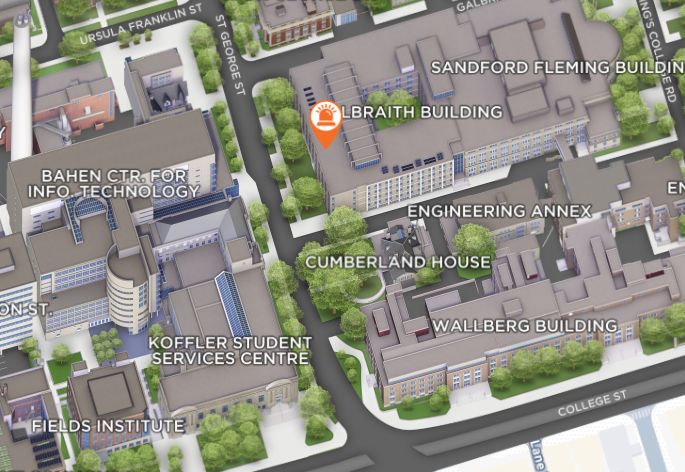
Location Galbraith Building Room 303, 35 St George St., Toronto, ON M5S 1A4
💲
Tuition $700/wk – Domestic $1100/wk – International
🎓
Audience High school students

Fusion is both a scientific wonder and an engineering grand challenge.

This course introduces students to the principles, technologies, and multidisciplinary thinking required to understand fusion energy — the process that powers the stars and could one day help power a cleaner future on Earth.

What is fusion?

Fusion energy is the process that powers every star in the universe and holds the promise of transforming how humanity generates electricity. A single kilogram of fusion fuel contains energy equivalent to millions of kilograms of coal.

Fusion has sustained our Sun for over five billion years and will continue to do so for billions more. Scientists and engineers are actively pursuing the challenge of replicating this stellar power source on Earth, with the goal of providing abundant, clean, and sustainable energy for future generations.

Fusion is multidisciplinary

Fusion energy is underpinned by nearly every branch of physics, including:

  • Nuclear Physics
  • Electromagnetism
  • Thermodynamics
  • Condensed Matter Physics
  • Astrophysics
  • Quantum Mechanics
Plasma inside the TCV fusion reactor
Edited image of plasma inside the TCV fusion reactor in Switzerland. Image courtesy of MIT Technology Review: “DeepMind’s AI can control superheated plasma inside a fusion reactor,” by Will Douglas.

Engineering challenges

How do you confine a plasma at 150 million °C without allowing it to touch the walls of its container? How do you develop materials capable of withstanding years of bombardment by high-energy neutrons? How do you design a power plant that reliably produces more energy than it consumes on a commercial scale?

These are among the grand engineering challenges of fusion energy — the effort to harness the same process that powers the Sun and stars to provide abundant, clean energy on Earth.

Solving these challenges requires innovations across advanced materials, superconducting magnets, high-performance computing, precision manufacturing, and intelligent control systems.

  • Electrical Engineering
  • Materials Engineering
  • Mechanical Engineering
  • Software Engineering
  • Computer Engineering
  • Physics and Applied Mathematics
  • Manufacturing and Industrial Engineering
  • Chemical and Nuclear Engineering
  • Controls, Instrumentation, and Robotics
Stellarator coil system schematic

From scientific achievement to practical energy system

Fusion requires the integration of physical theory, advanced engineering, materials design, computation, plasma control, and precision manufacturing.

Together, these disciplines are working to transform fusion from a scientific achievement into a practical source of clean, reliable, and sustainable energy for the world.

Edited image of stellarator schematic — coil system from Wendelstein 7-X in Greifswald, Germany, courtesy of Max-Planck Institut für Plasmaphysik.

About the Course

Fusion Energy: Taming a Star is an immersive one-week summer program designed for motivated high school students who are curious about physics, engineering, and the future of clean energy. Over five engaging days, students explore the science behind nuclear fusion — the process that powers the stars — and discover how scientists and engineers are working to recreate it safely here on Earth.

Through interactive lessons, hands-on experiments, and team-based design, participants build a strong foundation in atomic and nuclear physics, learning how energy is released from the nucleus and how fusion differs from fission. Students investigate plasma — the fourth state of matter — experiment with magnetic fields, visualize particle tracks in a cloud chamber, and explore how radiation is detected and used safely in non-energy applications.

The course introduces students to career pathways in physics, engineering, energy, and non-energy applications of nuclear science, while promoting discussion about the global energy challenge and the role fusion could play in a sustainable future.

About the AEMS Academy

The AEMS Academy, established through the Atomic Energy Materials & Systems (AEMS) nuclear research cluster at the University of Toronto, offers educational programs designed to inspire and prepare the next generation of engineers, scientists, and leaders in the highly multidisciplinary field of nuclear science and engineering.

In its inaugural year, the AEMS Academy is pleased to offer intensive one-week courses for highly motivated senior high school students in Grades 11 and 12 who demonstrate a strong interest and aptitude in science, mathematics, and technology. Through hands-on learning, exposure to cutting-edge research, and engagement with leading experts, students will gain insight into the scientific and engineering challenges shaping the future of energy, technology, and society.

The AEMS Academy courses are offered in association with the Department of Materials Science & Engineering, the Department of Electrical & Computer Engineering, and the University of Toronto Nuclear Energy Association.

💬

Mentorship Opportunities

Learn about fusion energy from expert faculty, graduate researchers, and senior undergraduate students at the forefront of science and engineering.

🎓

Multidisciplinary STEM Education

Fusion brings together engineering, physics, computing, materials science, and more. By exploring fusion, you'll develop knowledge and problem-solving skills that are valuable in virtually any STEM career.

Emphasis on Hands-On Learning

This course combines rigorous STEM education with exciting demonstrations, hands-on experiments, and interactive activities, giving you the opportunity to learn by doing and experience science and engineering in action.

👥

Meet Like-Minded and Driven Individuals

Students will have the opportunity to connect with other curious and motivated peers who share their passion for science and technology. Together, you will explore exciting topics in physics and engineering.

NOTE: The AEMS Academy program, which falls under the university-wide AEMS Toronto Nuclear Cluster, operates independently of the DEEP and CREATE outreach programs.

Dates, curriculum, demonstrations, location, and tuition.

Course Dates

Cohort 1: July 20–24, 2026

Cohort 2: July 27–31, 2026

Schedule

Monday–Friday

9:00 AM – 4:00 PM

Curriculum

  • Day 1: The Atom, Nuclear Energy, and Nuclear Reactions
  • Day 2: Electromagnetism and Plasma
  • Day 3: Fusion Theory
  • Day 4: Fusion Engineering
  • Day 5: Fusion Hackathon

Demonstrations and Experiments

  • Cloud Chamber: Visualize the traces of subatomic particles from the cosmic microwave background.
  • Designing and 3D Printed Fusion Reactors: Create your own take-home fusion reactor.
  • Fundamental Electromagnetism Experiments: Recreate iconic electromagnetism experiments.
  • Linear Glow Discharge Machine: See plasma discharge in the flesh and learn how to manipulate it.

Location

Classroom: Galbraith Building Room 303, 35 St George St, Toronto, ON M5S 1A4

We will also be touring various labs around campus.

Click here for a map

Map of the Galbraith Building location

Tuition

Tuition for the program is CAD $700 per week for domestic students and CAD $1,100 per week for international students.

Successful applicants will be asked to pay the full tuition fee within 48 hours of their acceptance offer in order to confirm their participation. Offers may be forfeited if payment is not received by the deadline.

We understand that exceptional circumstances can arise. If you anticipate any difficulties meeting the payment deadline, please contact us and we will do our best to assist you.

Eligibility, application process, and student support.

Eligibility

Any Ontario high school students in Grades 11 or 12 are eligible to apply.

Ambitious students in Grade 10 can apply but must answer additional questions.

There is no minimum grade requirement and no mandatory prerequisites. However, having a strong background and interest in physics, chemistry, and mathematics is highly relevant.

Applying

There is no fee to apply to the program. As part of the application process, applicants will complete a short application form with several brief questions about their interest in the program and why they would be a strong participant.

Applicants will also be asked to provide information such as age, educational background, dietary restrictions or allergies, and any accessibility requirements. Students are required to bring their own lunch and refreshments, though water and healthy snacks will be available.

All applicants are required to sign a participation waiver.

Applications submitted after the deadline will still be considered, subject to space availability, but will not receive priority during the selection process.

We intend to notify all applicants of their application status no later than one week after the application deadline.

Cancellation and Refunds

No refunds for cancellations.

In the unlikely event the program does not run, all participants will receive a full refund.